

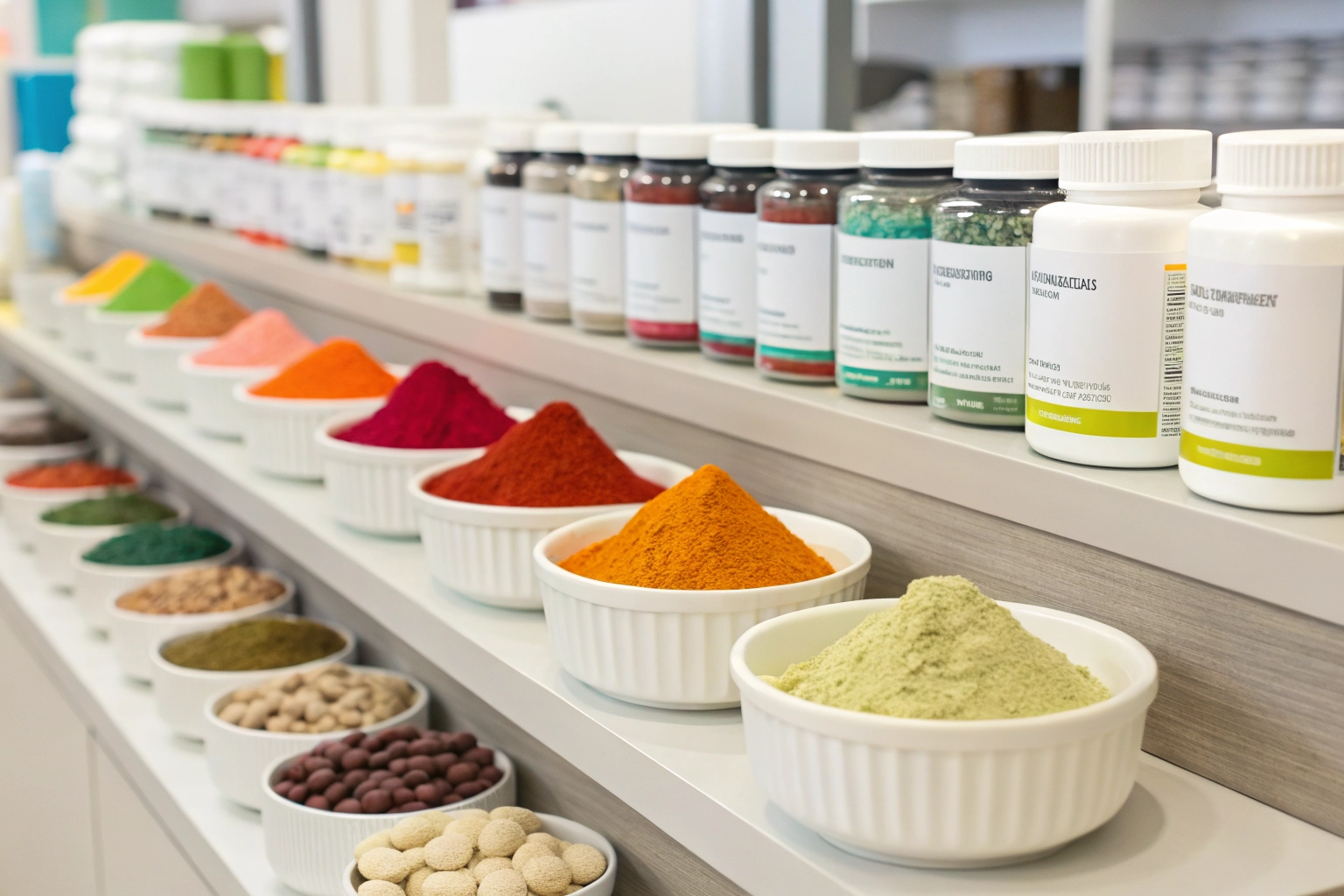
Most people who come to me for fertility support are already taking supplements. Many are taking them by the handful — prenatal vitamins, CoQ10, fish oil, probiotics, magnesium, inositol, melatonin for egg quality. They have done the research. They are being thorough. They believe they are doing everything right.
What many of them have never done is read the other ingredients panel.
The active ingredient list tells you what the supplement is supposed to do. The other ingredients panel tells you what it is actually made of — the binders, fillers, coatings, and flow agents that hold the capsule together and determine whether those active ingredients are actually bioavailable and whether they are delivering anything else along the way.
This article is about reading that panel — and about the quality markers that separate supplements worth taking from ones that undermine the very thing they promise to support.
The Label Markers That Actually Mean Something
Non-GMO Project Verified
The Non-GMO Project is a third-party certification — not a USDA program, and not self-declared. Products bearing the Non-GMO Project butterfly seal have been independently tested and verified to contain less than 0.9% GMO content in each ingredient. For supplements, this matters because common supplement ingredients — ascorbic acid (Vitamin C), tocopherols (Vitamin E), corn starch, maltodextrin, citric acid — are routinely derived from bioengineered corn or soy.
USDA Organic
For whole-food-based supplements (spirulina, mushroom extracts, herbal powders), USDA Organic certification means the raw material was grown without synthetic pesticides, herbicides, or bioengineered seed. It does not guarantee the manufacturing process is clean, but it addresses the source. Organic certification prohibits bioengineered ingredients by definition.
Third-Party Testing: NSF, USP, Informed Sport
The supplement industry in the United States is not pre-market regulated by the FDA in the same way pharmaceutical drugs are. A manufacturer can claim any ingredient at any dose on a label without independent verification that the product contains what it says it does, in the amount it says, without contamination.
Third-party testing programs address this gap:
- NSF Certified for Sport® and NSF International verify that the label accurately reflects contents and that no prohibited substances are present
- USP Verified (United States Pharmacopeia) confirms identity, potency, and purity standards
- Informed Sport is used primarily in athletic supplements and verifies batch-level testing for banned substances
For fertility supplements — which you are taking consistently, often for many months — third-party verification is not optional. It is baseline.
"The active ingredient panel tells you what the supplement is supposed to do. The other ingredients panel tells you what it is actually made of."
Bioengineered Ingredients Hidden in Common Supplements
You may be surprised to find bioengineered-derived ingredients in supplements you consider clean. Here are the most common:
Ascorbic Acid (Vitamin C)
The vast majority of ascorbic acid in supplements — including most "natural" vitamin C products — is synthesized via a fermentation process using bioengineered corn. Unless a product specifically states "Vitamin C from whole food sources" (acerola cherry, camu camu, rose hip) and is Non-GMO Project Verified or USDA Organic, you are almost certainly getting corn-derived ascorbic acid. This is not necessarily harmful, but for clients who are actively reducing their bioengineered ingredient load during preconception, it is worth knowing.
Tocopherols (Vitamin E)
Natural Vitamin E (d-alpha-tocopherol) is often sourced from soy — conventionally bioengineered soy. Look for Non-GMO Project Verified tocopherols, or Vitamin E derived from sunflower.
Maltodextrin and Corn Starch
These are common fillers in capsule and tablet supplements — and unless specified as non-GMO or organic, they are typically derived from conventional (bioengineered) corn. They appear frequently in probiotic supplements, protein powders, and multinutrient blends.
Citric Acid
Citric acid in supplements is almost never from citrus fruit. It is produced via fungal fermentation, typically on a corn or GMO sugar substrate. It is generally recognized as safe, but it is worth flagging for those with corn sensitivity or those trying to minimize bioengineered ingredient exposure.
Probiotic Quality: What Actually Makes a Probiotic Work
Probiotic quality is genuinely difficult to assess from a label, but here is what I look for:
- CFU count at time of expiry, not manufacture: A label that reads "50 billion CFU at time of manufacture" tells you nothing about what is alive in the bottle when you open it. Look for "guaranteed through expiration."
- Named, specific strains: Lactobacillus rhamnosus GG and Lactobacillus acidophilus NCFM are clinically researched strains with specific health associations. Generic "lactobacillus blend" is less meaningful.
- Refrigerated or verified shelf-stable: Many probiotic strains require cold-chain storage to maintain viability. Room-temperature stability requires either specific strain selection or technology like BIO-tract® or LiveBac® encapsulation.
- Free of unnecessary fillers: Many probiotics add inulin, FOS, or other prebiotics that can be problematic for those with SIBO, histamine intolerance, or sensitive digestive systems.
Brands and Categories: What I Trust and What I Question
I am not in the business of brand recommendations as a general rule — what is right depends on your constitution, your deficiency patterns, and your specific protocol. But I can share the category standards I apply:
Prenatal vitamins: I look for methylated B vitamins (methylfolate rather than folic acid, methylcobalamin rather than cyanocobalamin), choline inclusion, iron as ferrous bisglycinate (gentler on the gut), and Non-GMO Project Verified or USDA Organic certification. Brands that consistently meet these criteria tend to be from practitioner-grade lines rather than mass-market retail.
CoQ10: Ubiquinol (the reduced, active form) is significantly better absorbed than ubiquinone for most people over 35. Look for softgel delivery (lipid-soluble compounds require a fat matrix), minimal fillers, and Non-GMO Project Verified.
Magnesium: Form matters enormously. Magnesium glycinate is well-absorbed and gentle for most people; magnesium oxide (the most common and cheapest form) has very low bioavailability and a strong laxative effect. Magnesium threonate is specifically researched for brain and nervous-system benefits. Avoid formulas with unnecessary fillers or synthetic dyes.
Omega-3 (fish oil): Triglyceride form (rTG or TG) is better absorbed than ethyl ester form. Molecular distillation for heavy metal testing is non-negotiable. Third-party testing (IFOS — International Fish Oil Standards — is the relevant certification here). Fresh, not rancid: fish oil should not smell strongly fishy when you open the capsule.
The Bottom Line
The goal of this article is not to make supplement shopping more anxiety-provoking. It is to shift the question from what supplement should I take? to what am I actually putting in my body, and is it as clean as I think it is?
In Ayurveda, the quality of what enters the body determines the quality of what the body can build. Dravya — substance, matter — carries a quality (guna) that is transmitted into the tissues. A supplement full of synthetic binders, bioengineered corn derivatives, and unverified potency is not building ojas. At best, it is neutral. At worst, it is adding burden to an agni that is already working hard.
You deserve better than that. And so does whatever you are trying to grow.
